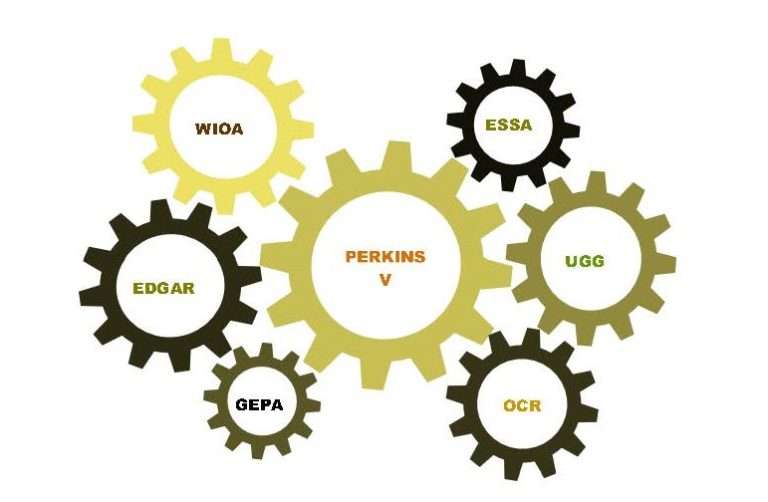
Federal Funding Resources
Learn more about the compliance aspects of federal grants programs by discovering The Bruman Group’s relevant trainings and publications, helpful summaries of federal funding laws, and links to government documentation.
Overview of Relevant Laws & Programs
Uniform Grants Guidance (UGG) / 2 CFR Part 200
The Uniform Grants Guidance (UGG), codified at 2 CFR Part 200, establishes the federal government’s comprehensive framework for managing grants and cooperative agreements. It consolidates and streamlines administrative requirements, cost principles, and audit standards for all non-federal entities receiving federal financial assistance—including educational institutions, workforce development agencies, nonprofits, and state and local governments.
Our firm provides legal counsel to help grantees interpret, implement, and comply with the Uniform Guidance, ensuring responsible stewardship of federal funds and minimizing risk. As part of this work, our Firm closely tracks regulatory updates to the Uniform Guidance, allowing our clients to be the first to know about upcoming changes. We provide grant lifecycle advising, beginning with pre-award phases and continuing through grant closeout. Our attorneys offer their expertise through training sessions around the country, helping clients understand the various components of the Uniform Guidance, such as procurement standards, cost principles, subrecipient oversight, and more. We also work with a range of grant recipients on drafting and updating policies and procedures, negotiating indirect cost rates, drafting and implementing monitoring protocols, and preparing for and responding to audits.
Education Department General Administrative Regulations (EDGAR)
The Education Department General Administrative Regulations (EDGAR) are a core set of federal rules that govern the administration of grants awarded by the U.S. Department of Education. Codified primarily in Title 34 of the Code of Federal Regulations, EDGAR outlines requirements for direct grants, state-administered programs, intergovernmental review, lobbying restrictions, and more. For education grantees, EDGAR works in tandem with the Uniform Grants Guidance (2 CFR Part 200) to establish expectations for financial management, procurement, performance, and accountability. Staying compliant with EDGAR is essential to maintaining funding, avoiding audit findings, and delivering high-impact programs.
The Bruman Group provides grant administration and strategic advising related to EDGAR, including guidance across the grant lifecycle, support with discretionary and formula grant applications, assistance with drafting and revising policies and procedures, ensuring alignment with the UGG, and audit preparation, among other services. Our attorneys advise clients across the country on these cross-cutting regulations and offer comprehensive training to ensure clients’ good stewardship of federal funds. EDGAR compliance is essential to managing federal education grants responsibly. Our team is here to help your organization navigate the regulations, protect your funding, and deliver programs that make a difference.
General Education Provisions Act (GEPA)
The General Education Provisions Act (GEPA) is a foundational federal statute that governs the administration of most education programs funded by the U.S. Department of Education. GEPA establishes key legal requirements for grant recipients, including rules related to privacy, program oversight, equitable access, and federal enforcement authority. For education grantees, GEPA works in tandem with program-specific statutes and regulations—such as the Elementary and Secondary Education Act (ESEA) and the Individuals with Disabilities Education Act (IDEA)—to ensure responsible use of federal funds and protection of student rights.
We provide comprehensive legal support to help education grantees comply with GEPA and related federal requirements. Our services include advising on GEPA Section 427 statements and equity planning, drafting and reviewing privacy policies and parental access procedures, responding to disallowance decisions and enforcement actions, and representing grantees in administrative hearings and appeals. Our attorneys also conduct workshops on GEPA compliance and student privacy and closely monitor updates in the field of student privacy.
False Claims Act (FCA)
The False Claims Act (FCA), codified at 31 U.S.C. §§ 3729–3733, is the federal government’s primary tool for combating fraud involving public funds. The FCA has evolved over decades into a powerful enforcement mechanism used across sectors—including education, workforce development, healthcare, and government contracting. For education and labor grantees, FCA compliance is essential. Allegations of false claims—whether related to grant reporting, procurement, or program performance—can result in treble damages, civil penalties, reputational harm, and exclusion from future funding.
Our Firm advises on FCA exposure in grant-funded programs, assists with preparing for compliance audits, trains staff on FCA obligations and whistleblower protections, defends against qui tam lawsuits and government-initiated actions, advises on disclosures, repayment obligations, and mitigation strategies, and assists with subrecipient oversight and contract language. The False Claims Act presents serious risks—but with the right legal guidance, grantees can protect their funding, reputation, and mission. Our team is here to help you navigate FCA compliance, respond to investigations, and defend your organization with confidence.
OMB Compliance Supplement
The OMB Compliance Supplement is a critical resource issued annually by the Office of Management and Budget (OMB). It provides detailed guidance for auditors conducting Single Audits of federal programs and outlines the specific compliance requirements that grantees must meet to maintain eligibility and avoid audit findings. For grantees—including state and local agencies, institutions of higher education, and nonprofit organizations—the Compliance Supplement serves as both a roadmap and a benchmark for managing federal awards responsibly.
The Bruman Group closely tracks the release of each year’s OMB Compliance Supplement and assists clients with staying ahead of regulatory changes, protecting their funding, and delivering programs with integrity. Our attorneys provide training on the components of the compliance supplement, advise grantees on changes from prior years, help prepare clients for monitoring and audits based on the compliance supplement, and offer support with interpreting agency-specific rules and audit focus areas. The OMB Compliance Supplement is more than an audit tool—it’s a blueprint for responsible grant management.
Federal Funding and Accountability Transparency Act (FFATA)
The Federal Funding Accountability and Transparency Act of 2006 (FFATA) was enacted to increase transparency in federal spending by requiring public disclosure of information about entities receiving federal funds. FFATA led to the creation of USAspending.gov, a searchable website that provides detailed data on federal awards, including grants, contracts, loans, and subawards. For federal grantees—including educational institutions, workforce development agencies, and nonprofits—FFATA imposes specific reporting obligations that must be met to remain in compliance and avoid enforcement actions.
Our firm provides targeted legal support to help grantees understand and meet their FFATA obligations, including advising on FFATA applicability and reporting thresholds, supporting integration of FFATA requirements into grants management systems, advising on executive compensation disclosures and exemptions, responding to findings from audits or federal monitoring visits, and ensuring alignment with the Uniform Guidance and EDGAR. FFATA compliance is essential to maintaining transparency and protecting your federal funding. Our legal team is here to help your organization meet its obligations, reduce risk, and strengthen your grants management infrastructure.
Digital Accountability and Transparency (DATA) Act of 2014
The Digital Accountability and Transparency Act of 2014 (DATA Act) is a landmark federal law designed to improve the transparency, accessibility, and quality of federal spending data. It expands on the Federal Funding Accountability and Transparency Act of 2006 (FFATA) by requiring standardized financial reporting across all federal agencies and grant recipients, and by making detailed spending data publicly available through USASpending.gov. For education and labor grantees—including state and local agencies, institutions of higher education, and nonprofit organizations—compliance with the DATA Act is essential to maintaining funding, reducing audit risk, and demonstrating responsible stewardship of taxpayer dollars.
Our firm provides tailored legal support to help grantees meet DATA Act requirements and integrate them into broader grants management strategies. Our services include interpretation of DATA Act provisions and related OMB guidance, advising on integration of financial data standards into internal systems, drafting and reviewing policies for financial reporting, data governance, and documentation, ensuring consistency with Uniform Guidance and EDGAR requirements, and conducting workshops on DATA Act compliance and financial transparency, among others. The DATA Act has reshaped how federal funds are tracked and reported. Our legal team is here to help your organization meet its obligations, protect its funding, and demonstrate accountability through transparent, compliant practices.
Federal Funding Training
- Publications
The Comprehensive Guide to the Federal Role in Career & Technical Education
$49.95This is a comprehensive guide for career and technical education programs covering the intersection between the Perkins V statute and the cross-cutting rules under the Education Department General Administrative Regulations and the Uniform Gudiance (2 CFR Part 200).
- Webinars
Title I, Part A – Program Requirements
$495.00🗓️ Recording Only
This session offers an introduction to the ESEA Title I-A program, focusing on programmatic requirements and covering topics such as standards and assessments, school improvement, schoolwide programs, targeted assistance schools, educator and paraprofessional qualifications, assessments, report cards, and more!
- Webinars
Title I, Part A – Fiscal Requirements
$495.00🗓️ Recording Only
This session offers an introduction to the ESEA Title I-A program, focusing on fiscal requirements such as comparability, supplement not supplant, maintenance of effort, rank and serve, and others.
- Webinars
Title III, Part A
$225.00🗓️ Recording Only
This session offers a beginner-level review of the ESEA Title III-A program to support English learners, including programmatic and fiscal requirements.
- Webinars
Title II, Part A
$225.00🗓️ Recording Only
This sessions offers an introductory course on the ESEA Title II-A program, including programmatic and fiscal requirements.
- Webinars
21st CCLC Subgrantees
$360.00🗓️ Recording Only
This session offers an introductory review of the 21st Century Community Learning Centers program under ESEA, including the requirements for States to run competitions for subrecipients, as well as the eligibility of applicants, the local requirements for implementing a program, and common grants management issues that impact 21st CCLC awards.
- Webinars
Title IV, A
$225.00🗓️ Recording Only
This session offers a beginner-level overview of the ESEA Title IV-A program, including programmatic and fiscal requirements.
- Webinars
The McKinney-Vento Homeless Assistance Act
$225.00🗓️ Recording Only
In this quick-hitting session, we’ll provide our list of the top-ten requirements to keep in mind when administering awards under the McKinney-Vento Homeless Assistance Act. We’ll also discuss the overlap and differences between EHCY and the ARP-Homeless Children and Youth funds.
- Webinars
Carl D Perkins Strengthening Career and Technical Education Act (Perkins V)
$360.00🗓️ Recording Only
This introductory session offers an overview of the Perkins Career and Technical Education program, including programmatic and fiscal requirements.
Helpful Federal Documentation

- Education Department General Administrative Regulations (EDGAR)
- ED’s Cost Allocation Guide (2019)
- Time and Effort Documentation References
- General Education Provisions Act (GEPA)
- ED Food Guidance